
Identify a Hancock County Owner
Start with the land, not a name. An address leads to the PVA parcel and the January 1 tax owner on the certified roll. The parcel number and legal description then unlock the Clerk's recorded deed index. That step shows who took title. If a portal fails, the counter still works.
- Enter the address in Hancock PVA/qPublic. Capture its tax owner, parcel ID, situs and mailing fields, and roll year.
- Search that owner as grantee in the County Clerk index. Match the land by legal description, deed reference, or parcel clue rather than name alone.
- Read the newest deed conveying the same land. Its grantee is the recorded title lead, subject to later instruments and title issues.
- If a company is named, check its exact legal identity through Kentucky business filings. Preserve trust and estate names as recorded.
The flow keeps each office in its lane. The PVA's dated tax-owner field confuses plenty of people running a property search, so the details matter. The Hancock County current owner record covers it.
Hancock's January 1 Owner Rule
The PVA fixes tax ownership on January 1. That date is the catch. Hancock County itself warns that a purchase later in the year can leave the former owner's name on the bill until the next calendar year rolls over. A mismatch like that is a timing artifact, not proof of an error.
Check the roll year first. Then compare the deed's execution and recording dates. A current recorded grantee can still differ from the tax owner for months. The bill's mailing or in-care-of line may add yet another name, and none of that establishes title.
Note: A Hancock County owner name is useful only when its source and as-of date travel with it.
Hancock County Ownership Sources
Ownership lookups run through three official paths. No single database blends them in real time. The PVA, the Clerk, and state map services each answer a different piece, and Kentucky GeoNet serves as map context rather than a local owner directory since Hancock County publishes no public parcel GIS of its own.
| Where ownership appears | What it contributes | Access path |
|---|---|---|
| Hancock PVA certified roll | January 1 tax owner, parcel ID, assessment and address fields | qPublic or PVA office |
| County Clerk deed index | Grantor, grantee, instrument date, book/page or number | eCCLIX or free office inspection |
| Kentucky business search | Entity name, status, filings, and registered agent | Free statewide search |
| Recorded plat and deed description | The lot or tract link that separates same-name parties | County Clerk records |
Begin an ownership search at the official Hancock PVA page.
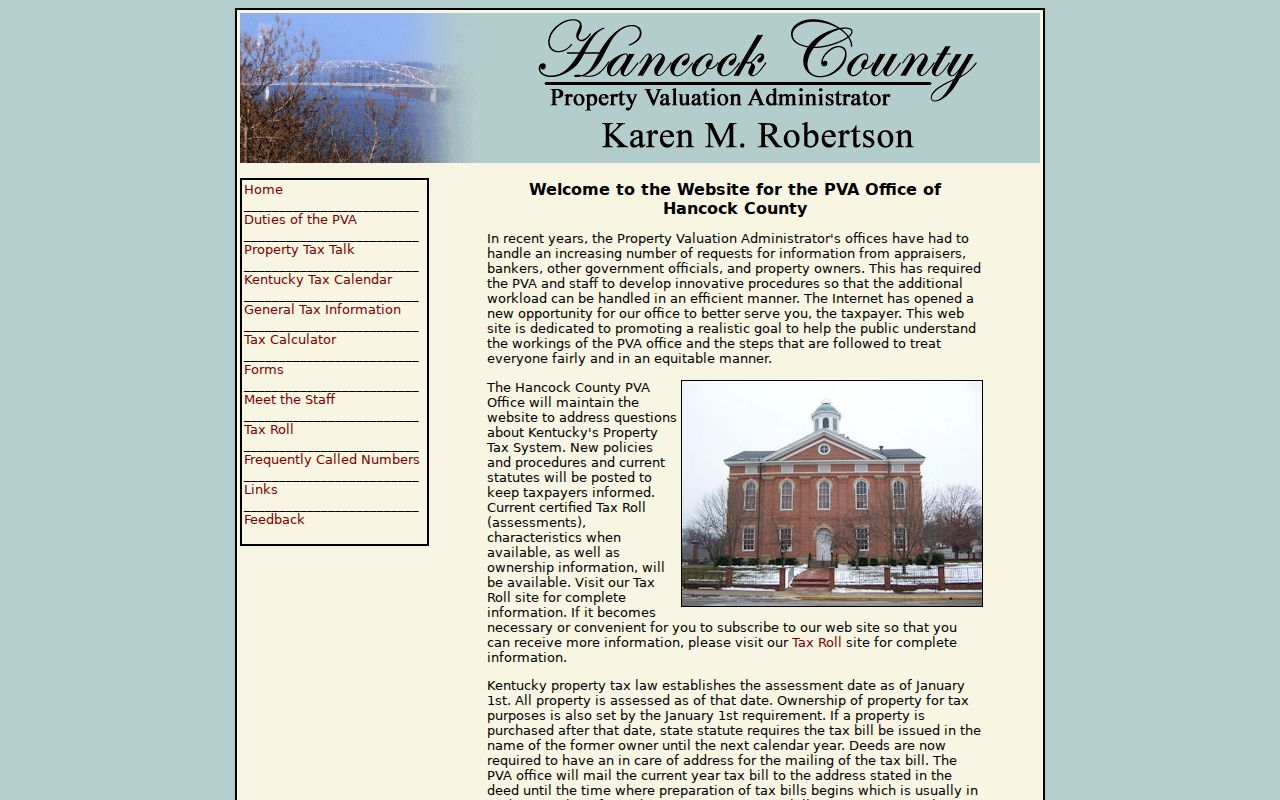
The PVA page points to the right source. The owner answer still takes a live parcel result and a matching deed check.
The PVA owner is rarely the occupant. Mailing addresses can sit out of state. A deed can also vest title in an entity whose members never show on the parcel card, which is a normal limit of the records rather than a gap for a commercial directory to fill.
Latest Hancock Deed Confirms Ownership
Deeds are the final word on title. The Hancock County Clerk records deeds, mortgages, liens, easements, plats, and powers of attorney, with indexing and scanning back to 1979. Images from January 2004 forward are mostly online, though remote eCCLIX access can require an account or software.
Then match the deed to the parcel. The legal description and parties must line up. Watch for a later deed, court order, master commissioner deed, executor's deed, or affidavit that changes the result. The index points to proof, not the instrument itself.
Company Owners of Hancock Property
Grantees are not always people. Copy the full legal name exactly. When a deed names an LLC or corporation, the Kentucky Business Entity Search can surface the entity record and its registered agent, and it may flag a name change or dissolved status. That search cannot tie the company to the parcel.
Trusts and estates take another path. Search the recorded instrument for a trustee, executor, heirs, or an affidavit of descent, using probate records only when they bear on the transfer. The property link still comes from the deed or a recorded court order.
- Owner of record
- The party named by a specified official record on its stated date.
- Grantee
- The person or entity receiving an interest through a deed.
- Vesting
- The language showing who holds title and in what form.
- Situs address
- The land's physical location, distinct from the owner's mailing address.
Offline Hancock Owner Routes
Not everything works from home. The live qPublic interface can stall, and eCCLIX image access may require an account. The PVA and the Clerk share 225 Main Cross Street in Hawesville, but they remain separate custodians with separate records. Call ahead. Bring address, parcel ID, owner spelling, and dates.
Index viewing in the office is free. Written requests may go by email, fax, mail, or hand delivery, stating the grantor or grantee, instrument or book and page, date range, and legal description. Older deed books may require the Hancock County Archives at the Old Courthouse.
Hancock DOC ALERT Monitoring
DOC ALERT is free from the Clerk. It emails a subscriber when a deed or mortgage bearing a supplied personal or business name gets recorded. Treat it as a watch, not a lookup. It does not prove fraud, confirm a parcel match, or replace reading the filed instrument.
Use exact name variants the deed supports. When an alert lands, compare the document type, parties, date, and legal description before assuming a match, since common names often surface unrelated filings. A renamed company may need its own alert term.
Limits of Hancock Owner Findings
An address-to-owner lookup names the public parties on the record. That is its limit. It cannot tell you who actually lives in a home. Nor does it settle a boundary dispute or take the place of a title examination. Parcel lines and tax addresses work best as starting points. Full title work may pull in liens, easements, releases, probate papers, and court orders.
Kentucky Safe at Home shields qualifying participants by substituting addresses and forwarding mail. Real-estate holdings are expressly exempt from that general protection. Public status does not invite broad republication. Pull only the least personal data your Hancock County property question truly needs.
Lawful use. Hancock County ownership records support deed research, sale diligence, estate work, and boundary questions. Never use them to harass, intimidate, or target anyone.